
Does every iconic character need trauma to be interesting?
Please stop throwing your characters down emotional staircases.

Introduction
For lovers of fiction, characters are emblematic of our own selves, our complications, weaknesses and strengths. This is why certain characters remain with us even after the show’s end. Characters, despite having dark origins or narrow plotlines, manage to find a way to stay with us. It is their unique and idiosyncratic traits within certain characters that make them timeless and iconic.
It is often believed that every iconic character needs a compelling and complex origin story; however, does this always need to be the case?
Trauma as a character trait device
So many contemporary iconic characters, such as Batman and Harry Potter, come with dark origins. Both share the same fate of being orphaned as a kid as well as being the “chosen one” who needs to bear the responsibilities of not only their own power but also the world they are a part of. The characters were designed to embrace the trauma and shine on. In these cases, the creator uses trauma as a driving force to push the character to their core. It navigates the plot’s trajectory, towards what is seen as morally good.
On the other hand there are morally corrupt characters such as the Joker and Voldemort, who were so deluded by their trauma they failed to see anything beyond that and remained morbidly stuck to their past.
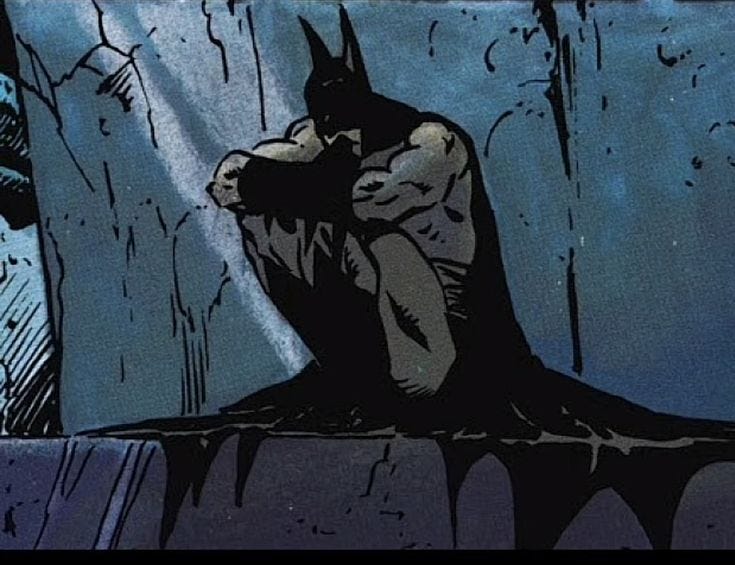
What makes non-traumatic characters stand out?
Trauma is something that affects all of us. However, is it really that necessary an attribute? Let us take the example of SpongeBob and Winnie the Pooh; characters with no traumatic origin or backstory. They are remembered and stand out due to their innocent and cheerful character throughout.
When the creators of Batman and Harry Potter chose emotional distress to shape their character traits, SpongeBob and Winnie the Pooh are defined by their emotional honesty. It’s not that either of these characters don’t have trauma, but that they are not shaped or hardly associated with it. Best explained is how SpongeBob is popular in meme culture to be used as a character that stays optimistic even after a traumatic experience.
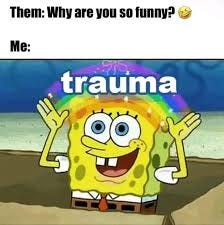
Why is trauma used as a storytelling device?
The use of trauma as a modern storytelling device is very simple. It is a route for the audience to connect with the character while also explaining motivations and actions simply. It is a tool that creates stakes. It can be best explained through Peter Parker and how his traumatic experience of witnessing his uncle’s murder served as a motivation for Peter to move forward, and for the audience to connect to. As modern storytelling trends favor psychological complexity in characters, Elsa and Peter Parker stand as one of the best examples of why trauma can be used as a great storytelling device.
What makes a character interesting?
Trauma isn’t the only defining factor in what makes a character iconic or interesting; many other traits make a character stand out and stronger. A few of the examples are:
Strong Values
Emotional Authenticity
Distinct Perspectives
In modern storytelling, trauma is simply a tool that is very commonly used and something that works each time. Sherlock Holmes is one of the few characters who is interesting due to their intellect and not their tragic backstory, despite having one.
When ‘trauma’ as a plot device does work
Even though trauma might be one of the most commonly used character tools, it’s portrayal is something that is hard to present accurately. One of the reasons why, is as mentioned, to offer character complexity, which needs to be accompanied by writing that draws in the audience while also keeping up with the flow of the storytelling.
A unique example of trauma portrayal is through Walter White from Breaking Bad. The show takes us through the journey of Walter White to Heisenberg, where in the beginning the character seems to have no traumatic origin, but by the end, it turns into a character that is deeply devastated. Instead of starting with a protagonist that has a traumatic backstory, the character chose to start with a blank canvas for Walter, and we’re joined along with his journey as the story goes on. The story is the traumatic experience he goes through, leaving us with the experience and the shaping of Walter.
What we (as an audience) can do
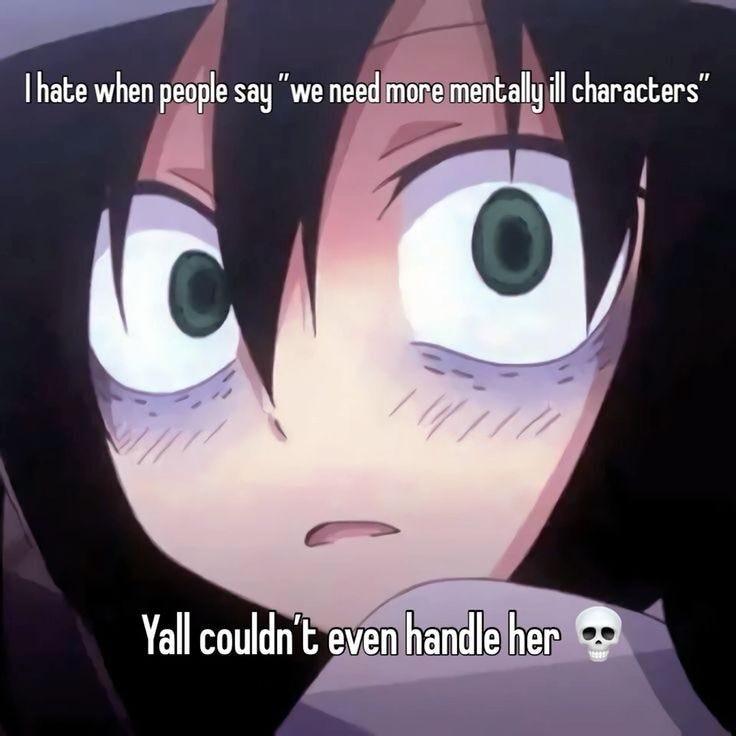
Though most of the characters we mentioned with non-traumatic origins are children’s characters, the character complexity that comes with trauma as a defining factor for the character often leads to misunderstanding and confusion.
We need to understand that a character with traits associated with trauma is inescapable. It is common and everywhere, hence dwelling on the relatability factor. As the audience, the best we can do is not letting trauma be the defining factor for a character, yet also cancelling out any simple character that lacks depth or so. It is our responsibility as the audience to see the characters for the true selves, as trauma is merely a part of them.
Things to sit with after reading
Should we pave the way for more, less trauma-associated characters that aren’t associated with children’s tv shows and movies?
Can characters work with a simple, straightforward personality without traumatic traits?
And that’s a wrap.
Characters with trauma associated with past or origin can work, where emotional honesty shines over emotional distress.
Trauma in characters are often taken in both positive and negative ways such as for Batman and the Joker.
Traits such as distinct perceptions, relatability, etc can work as alternatives to interesting character traits.
This was Kyuu Studios. Another why, answered in nine.
If you read all nine steps, congrats — you’re already part of the fandom economy. Consider this your weekly reminder that liking things is a full-time personality.
New questions drop regularly. Same nine-step chaos, every time.
If this question lives rent-free in your head too, subscribe — Kyuu Studios runs on curiosity. See you at the next “why?”
About the writer
Medha is a teenager from Kochi, Kerala. She is chronically online and has found pleasure in writing about media and pop culture, while also actively being engaged in literature. With a passion for writing and journalism, she also has her own Substack newsletter under the name ‘Medha Writes’.